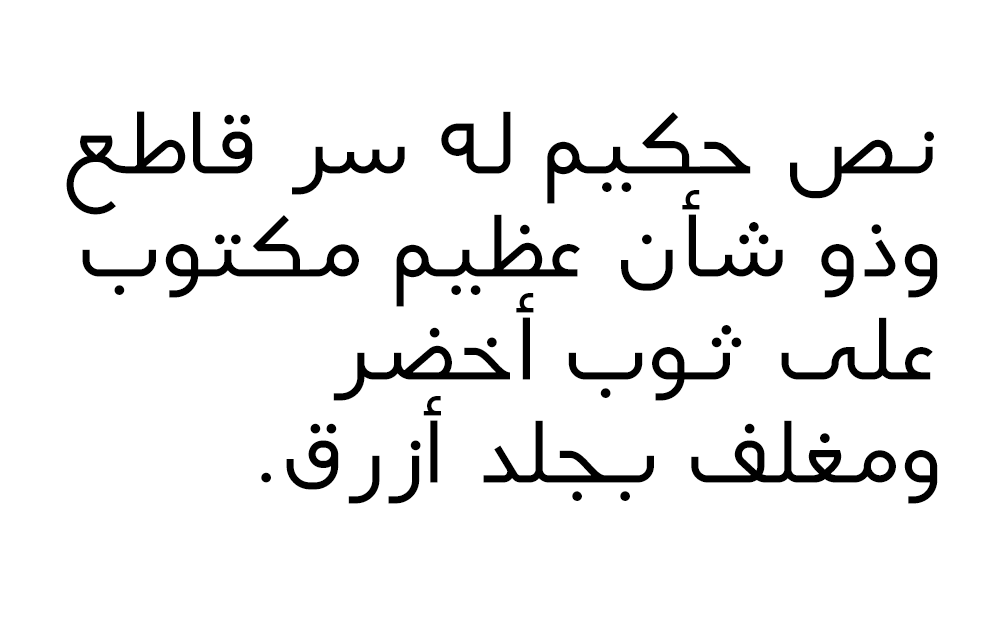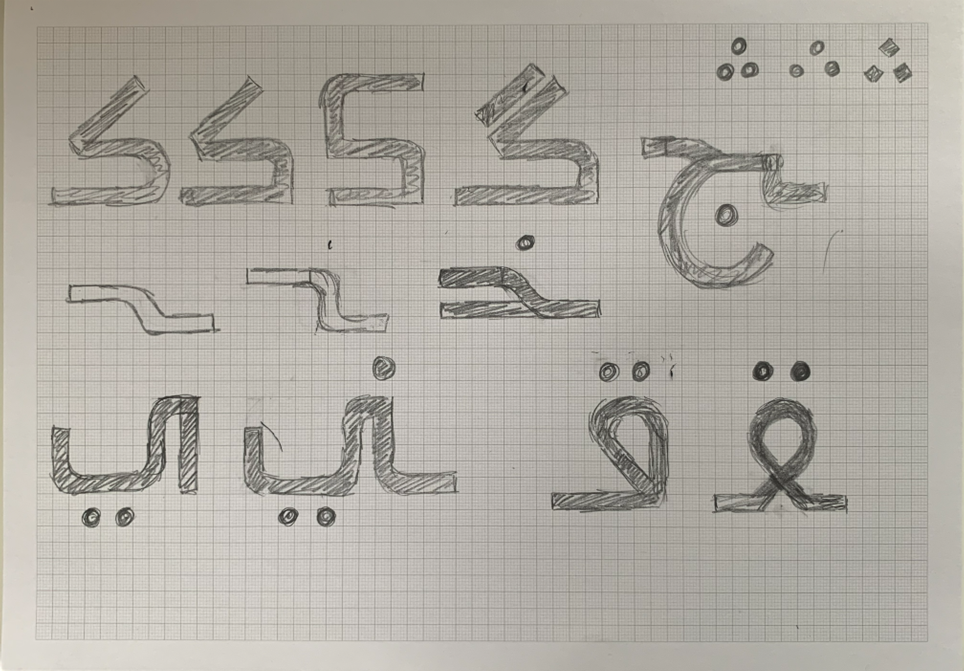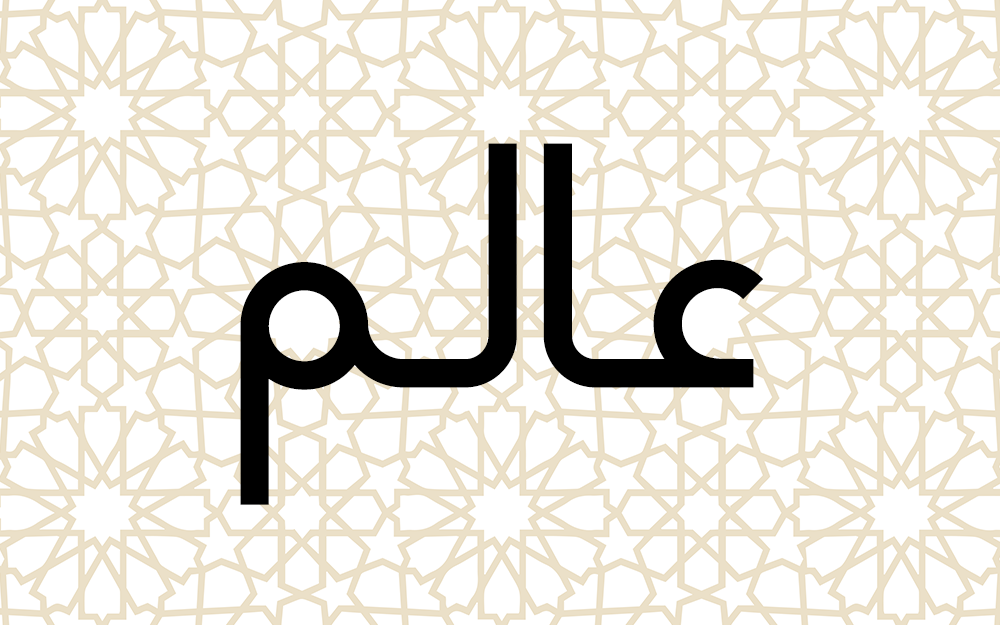
I created Alam for my dissertation project in the final year of my honours degree.
Now this was something new! Arabic type design was a challenge. While I was born and raised in the UAE and have some grasp of the local variety of the language, that doesn’t automatically translate to being able to make a typeface for it. Wanting to incorporate my knowledge and interest in Japanese type design into this project, I decided that it would probably be easier for me to work on a gothic typeface, and so came up with the idea of something cross-cultural, or rather universal – applying Japanese Universal Design (hereafter UD) principles to an Arabic typeface.
A big part of Alam’s development was getting it to work within game engines and making sure it was an easy to read typeface within games. As such, I mainly referenced Fontworks’ UD Kakugo and Morisawa’s UD Shingo typefaces – which are used in all recent Pokémon titles and the Nintendo Switch UI respectively. Alam was ultimately designed to work alongside these two typefaces. I was also inspired by some signage in the Dubai Mall car park which used a very modern, easy to read style of lettering that I had not seen much elsewhere. During the course of my dissertation research, Alam was tested with simulated visual impairments and blurs to ensure that the glyphs would be legibile to a wider set of users, and feedback on the regular, unmodified typeface was gathered from native Arabic speakers.
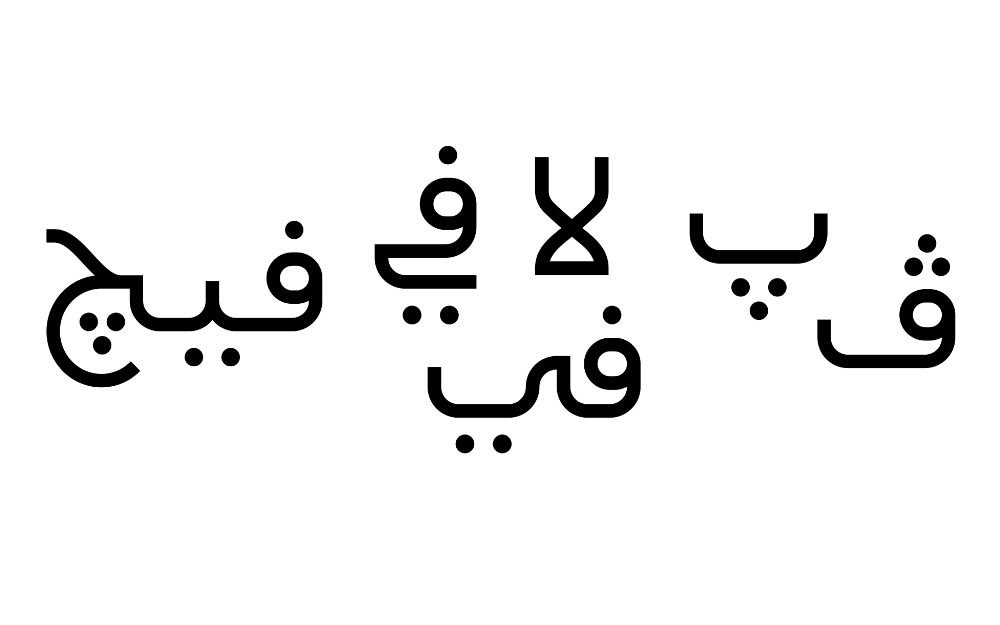
Among the standard set of glyphs are some ligatures commonly used in Arabic, with some of those ligatures having a couple different styles (because I couldn’t make up my mind on what looked better). Some glyphs from Farsi that are used in the Emirati dialect of Arabic were also included (because I wanted to support the dialect I know), as well as some letters mainly used to write loanwords from European languages – which I figured would be of great use in an Arabic UD typeface.
I really owe a lot to Khatt Books and Lebanese designer Huda Smitshuijzen AbiFarès whose books on Arabic type design were incredibly useful during the development of Alam, without which I don’t think I would have been able to complete the font. I am under no illusions about Alam – it’s far from perfect. But, I think I managed to create something decent which can be paired with proper Japanese UD fonts. Arabic is a language I would love to tackle again in font form if I had the opportunity, though I think I would want to take some design classes with a professional Arabic type designer and/or calligrapher.
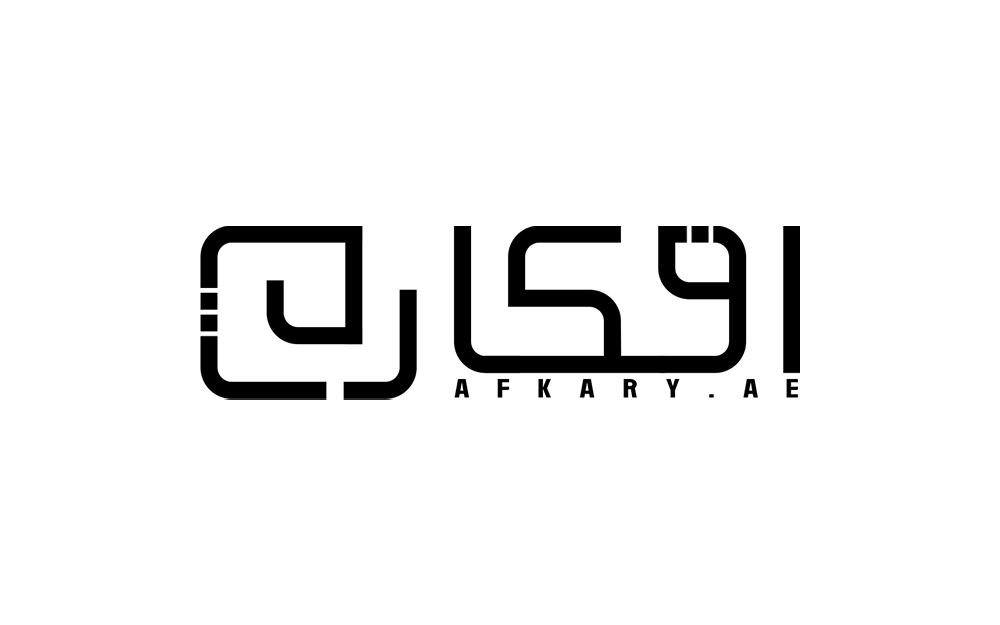
I later used Alam as a base to create the logo for my personal blog, Afkary.
Alam can be downloaded here. Note that it supports only Arabic glyphs, and you may need to configure your program of choice to be able to properly render the language.
This font is released under the SIL Open Font License – and as such can be used, modified, and distributed freely (so long as the resulting font remains under the Open Font License). The only stipulations are that the resulting font bears a different name, and must remain free to use.